
Missed Call Text Back: How Local Businesses Keep Callers From Calling Someone Else
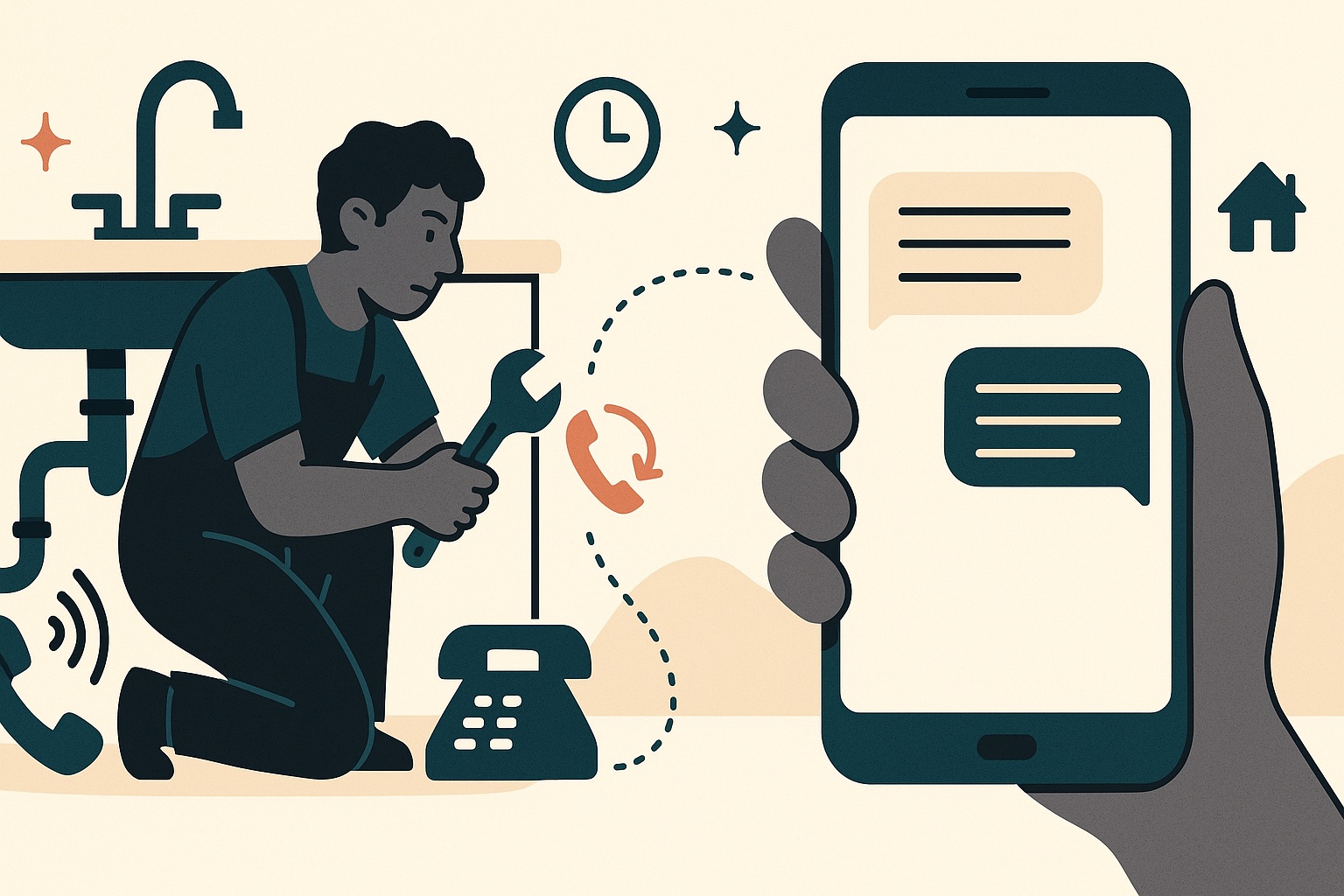
Your phone rings while you are under a sink, with a client, or ringing up a customer. You call back an hour later, and the person has already booked someone else. Missed call text back is a simple fix for that moment: when you cannot answer, the caller gets an automatic text from your business within seconds, so the conversation keeps going until you are free. This guide explains how it works, what a good text says, the rules to follow, and how to set it up.
What Is Missed Call Text Back?
Missed call text back is a feature in many business phone systems and customer management tools. When a call to your business number goes unanswered, the system sends the caller a short text, something like “Sorry we missed your call. How can we help?” The caller can reply by text, and you answer when you have a minute.
You decide how long the phone rings before a call counts as missed. HighLevel, the platform we use, recommends 10 to 20 seconds. Much longer and the text arrives after the caller has moved on; much shorter and it fires before you can reach the phone.
Why It Works for Local Businesses
When someone calls a local business and nobody answers, they often call the next business on the list. A text that arrives right away tells them a real business got their call and will help them. That alone keeps many people from dialing your competitor.
It also changes how the conversation goes. Plenty of people would rather text than leave a voicemail, and a text reply often tells you exactly what they need before you call back. You can answer between jobs instead of waiting until the end of the day. And it works after hours, when nobody is there to pick up at all.
What a Good Missed Call Text Says
Keep it short and make it sound like a person. A good missed call text does five things:
- Names your business, so the caller knows who is texting.
- Acknowledges the call and apologizes for missing it.
- Asks what they need, or offers a way to book.
- Says when you will get back to them.
- Tells them how to stop the texts, usually “Reply STOP to opt out.”
Here are three examples you can adapt:
- A plumber: “Hi, this is [Business Name]. Sorry we missed your call. We are out on a job right now. What can we help with? Reply here and we will get back to you within the hour. Reply STOP to opt out.”
- A salon: “Thanks for calling [Business Name]! We are with clients at the moment. Want to book? You can grab a time here: [booking link]. Or reply with your question and we will text you back. Reply STOP to opt out.”
- A landscaper, after hours: “Hi, this is [Business Name]. Our office is closed for the day, but we got your call. Reply with your address and what you need, and we will reach out first thing tomorrow. Reply STOP to opt out.”
For more wording ideas, see these 20 texts customers actually welcome.
Mistakes to Avoid
Turning it into an ad. The caller wanted to talk to you, not to get a coupon. Keep the text about their call. Save promotions for customers who have agreed to hear them.
Nobody answering the replies. An automatic text that leads to silence is worse than no text at all. Decide who watches for replies and how fast they answer before you turn it on.
Texting the same person over and over. If someone calls three times in five minutes, many systems send three texts. Ask whoever sets it up to add a short wait or a limit so a worried caller gets one text, not a pile of them.
Forgetting the after-hours version. “We will get back to you within the hour” is a broken promise at 9 PM. Use a separate message for when you are closed.
The Texting Rules You Need to Know
Business texting has rules, and the phone carriers enforce them. Two matter most here.
Register your number for texting. If you text from a regular 10-digit business number, the carriers require the business and the type of messages it sends to be registered first, a process called A2P 10DLC registration. Unregistered texts do not just land in a spam folder; Twilio, one of the largest texting providers, blocks them completely. Registration can take days or weeks, so start early.
Respect opt-outs. Include a way to stop the texts, and honor every “STOP” right away. Keeping the message about the caller’s own call, not a sale, also keeps you on the right side of the rules. If you are unsure about anything for your business, ask your texting provider or your attorney before you turn it on.
How to Set It Up
Start by checking whether your current phone provider or customer management software already includes missed call text back. Many do. Then:
- Confirm your business number can send texts, and complete the registration above.
- Write two messages: one for business hours and one for after hours.
- Set how long the phone rings before a call counts as missed.
- Test it by calling from your own cell phone and letting it ring out.
- Choose who answers the replies, and make sure their phone notifies them.
Missed call text back works best as part of a follow-up system, not on its own. Our guide to fixing your follow-up covers what happens after that first reply.
How to Tell If It Is Working
Track three numbers each month: how many calls you missed, how many of those callers replied to the text, and how many of the replies turned into a booking or a sale. If a single new customer is worth a few hundred dollars to your business, it does not take many recovered calls for the setup to pay for itself.
Frequently Asked Questions
Is missed call text back the same as voicemail?
No. Voicemail waits for the caller to leave a message. A missed call text reaches out to the caller first, and many people will answer a text who would never leave a voicemail. You can use both.
Will the caller know it is automatic?
Some will, and that is fine. What matters is that a real person answers when they reply. Write the text in your own voice and it will not feel robotic.
Let Digital Maestro Set It Up for You
Social Maestro is part of Digital Maestro, and Digital Maestro sets up missed call text back for local businesses, along with the registration, the messages, and the follow-up that comes after. If you would rather have it done for you, we are happy to talk through what would work for your business.






I’ve never heard of this, or had it happen for me. What a great idea. If I got a text like that I would more than likely continue my communication with that business.
Most callers just want to know someone got their message, Barbara. A good text uses the business name and says when you will call back, so it reads like it came from a person and not a robot.
So true, Paul! And this goes beyond missed business calls: if you tell someone you’ll call back, actually calling back is a matter of respect and trust. An automatic text is a good start, but it can never replace keeping your word.
The text only buys you time, and the callback still has to happen. That is why it should promise a time you can keep, like “later today” instead of “in a few minutes.” Keeping a small promise like that is how trust starts.
I enjoyed reading ideas of what wording to use. Also, I like the reminder not to turn this into an advertisement, and to actually let the caller know that you value them and want to help them. A text response would make a difference and I’m sure I’d like to use that feature. Diana
Diana, this feature is often already built into the phone or booking system a business uses, so check there first. If you set it up, call your own number from another phone and read the text the way a caller would.