
How to Win Back Customers Who Ghosted You
Every local business owner has them. The customers who used to come in regularly, who said, “We’ll definitely be back,” who genuinely loved what you do, until they disappeared. No complaint. No bad review. No dramatic exit. Just silence.
Here’s the uncomfortable truth: most businesses never follow up. They assume those customers are gone forever or, worse, they pretend not to notice. But lapsed customers are one of the most profitable opportunities sitting inside your business right now. Not new leads. Not cold traffic. Not more ad spend. The people who already said yes once.
Let’s talk about how to win back the customers who ghosted you, intelligently.
First: Why Customers Ghost
Before you launch a “We miss you!” email blast, understand something important: most customers don’t leave because they’re angry. They leave because a competitor ran an ad at the right moment, life got busy, routines changed, they forgot, or you stopped showing up. That last one stings.
The average small business dramatically reduces communication after the initial sale. Fewer posts. Fewer emails. Fewer reminders. No retargeting. Out of sight becomes out of mind. And if you’re not consistently visible, your competitor will happily take that mental real estate.
The Numbers Make This Obvious
Acquiring a new customer costs far more than keeping one you already have; by many estimates, five to seven times more. And increasing retention by just 5% can increase profits by 25% to 95%, according to research popularized by Harvard Business Review. Yet most marketing budgets are still spent chasing strangers.
Win-back campaigns are not desperation plays. They’re smart allocation of attention. They focus on people who already trust you enough to have paid once, and who are far easier to re-engage than a cold lead scrolling past your ad.
Your 8-Step Win-Back Playbook
Step 1: Define “Ghosted” Properly
You can’t win back what you haven’t identified. Look at your data and set a clear lapse window based on your buying cycle.
For restaurants, that might be 60 to 90 days. For salons, six to eight weeks. Auto service businesses might look at 6 to 12 months. Gyms often define it as 30 days inactive. Retail may be 90 to 120 days.
Pull a list of customers who haven’t returned within your normal cycle. That’s your audience. Not everyone. Not random followers. Actual paying customers who went quiet.
Step 2: Stop Sending Generic “We Miss You” Messages
Nothing screams low-effort like, “Hi, we haven’t seen you in a while. Here’s 10% off.” That’s not compelling. That’s lazy.
Instead, make your outreach specific and contextual. “Most people schedule their winter tune-up around this time. Want us to check your system before the cold hits?” Or, “You usually book your color every eight weeks. We’re holding a couple spots this week if you want one.” Or even, “You grabbed our VIP Special last year. We updated it for this season.”
That’s not spam. That’s relevance. And relevance reactivates.
Step 3: Use Multi-Touch, Not One Shot
One email is not a campaign. A real win-back sequence unfolds over time. You might start with a friendly reminder, follow up with value-driven content related to their last purchase, introduce an incentive if needed, layer in a scarcity angle, and close with social proof that highlights what customers are loving right now.
Customers rarely respond to the first touch, especially if they’ve already drifted. Consistency signals confidence, and confidence builds trust.
Step 4: Personalize Based on Behavior
This is where most local businesses drop the ball. If someone came in for brake service, don’t send them a generic oil change promo unless it’s relevant to timing.
Segment based on last service, purchase category, time since last visit, average spend, and loyalty status. Even light segmentation dramatically increases re-engagement. It shows you’re paying attention, which, ironically, is what they wanted in the first place.
Step 5: Layer in Retargeting Ads
Here’s where it gets pro-level. Upload your inactive customer list into Meta or Google Ads and run simple awareness campaigns within a tight radius around your business. Show a reminder reel. Share a testimonial. Highlight what’s new this season.
You’re not targeting strangers. You’re reinforcing familiarity. Sometimes customers don’t need a discount. They just need to see you again. A modest $5 to $10 per day retargeting campaign aimed at former customers can produce strong ROI, because the trust gap is already closed.
Step 6: Give Them a Reason to Return, Not Just a Discount
Instead of slashing prices, give them a practical reason to come back. Maybe you’ve opened up a few faster appointment slots. Maybe you added online booking. Maybe you introduced a new service customers have been asking for. Maybe you’re offering returning clients a small complimentary add-on or perk.
Most local customers don’t need a coupon. They need a reminder, and a reason that makes sense in real life.
People come back for novelty, attention, and ease. And if you do use an incentive, frame it as appreciation, not desperation. “Because you’ve supported us before…” That language matters.
Step 7: Audit Why They Might Have Drifted
If a large chunk of customers are ghosting you, it might not be marketing. It might be experience. Long wait times. Unreturned calls. Stale social media. Outdated Google photos. No follow-up after purchase.
A win-back campaign can bring people back once. Only operational excellence keeps them. Before you spend money chasing ghosts, make sure your house isn’t quietly pushing them out.
Step 8: Automate It
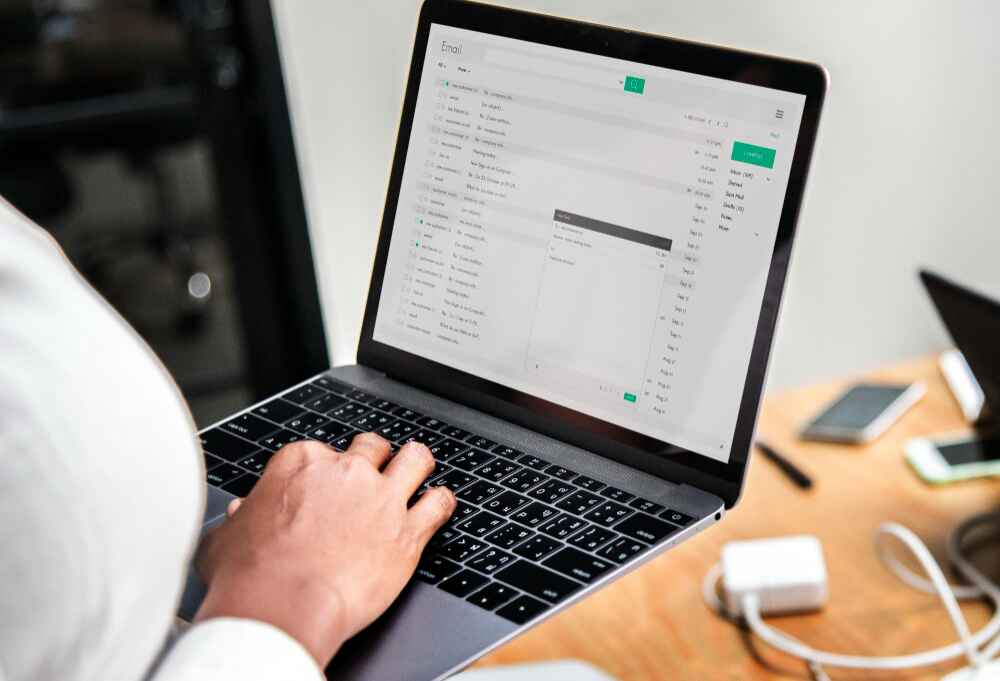
This shouldn’t be a one-time “let’s try this in January” project. Set up a CRM trigger when someone hits your lapse window. Automate reminder emails and SMS follow-ups. Sync retargeting audiences. Review your inactive list monthly.
Retention systems outperform reactionary marketing every time. And once built, they quietly reactivate revenue you would have otherwise lost.
What a Good Win-Back Campaign Actually Feels Like
It doesn’t feel pushy. It doesn’t feel needy. It doesn’t feel like a clearance sale. It feels like, “We noticed. We care. Here’s something useful.”
Customers don’t want to be hunted. They want to be remembered.
The Bigger Picture
Most businesses obsess over growth but ignore recovery. Win-back campaigns are recovery marketing. They stabilize revenue, improve lifetime value, reduce dependency on constant new lead generation, and make your marketing more resilient.
In a world where attention is fragmented and loyalty is thinner than ever, that stability matters.
Final Thought
If someone paid you once, there was a reason. Your job isn’t to beg them back. It’s to remind them why they chose you in the first place.
Do that consistently, with relevance, timing, and visibility, and you’ll turn “ghosted” customers into some of your most loyal ones. And that’s a whole lot cheaper than chasing strangers every month.
Ready to Reactivate Customers You Already Earned?
The hard part of a win-back campaign isn’t the idea. It’s the consistency: the segmenting, the timing, and the multi-touch follow-up that has to keep running long after the first busy week. That is exactly what we build and run for local businesses at Social Maestro, so the revenue you already earned stops slipping away quietly.



It’s easier not to have to worry about people who don’t “like” your business anymore (or so we think). If only we gave them a little bit more of ourselves, and our attention, eh? I love my writing club members and I make sure I tell them that all the time. If I make something new, they try it first, and/or get it cheaper. Any fun thing I create goes to them first. 🙂
Daniela, you have already figured out what most businesses miss. Letting your writing club members try new things first, and for less, is a great way to keep them close so they never wander off. The attention you give them is what makes the difference, and it sounds like they feel it.
very helpful tips there – thank you Paul 🙂 alice
Alice, thank you for reading. I hope you find a customer or two to reach back out to this week, since that is usually where the quick wins are hiding.
I love how you said that customers don’t ghost you because they’re mad – life just got busy.
One thing I want to add is I will actually ghost a company once I feel they are being pushy. That one thing alone will make me run the other way.
You have some great statagies here to bring the customer back in without being pushy.
Barbara, that is such an important point. Pushy is the fastest way to turn a quiet customer into a gone one for good. The whole idea is to reach out in a way that feels like you care, not like you are chasing a sale, and it sounds like you can spot the difference right away.
Very good points but it sounds like a lot of work (wooing) I hate being pestered or doing the pestering. Goes to show why I fail at enterpreneurship.
Lily, I hear you, and I promise it does not have to feel like pestering. A simple, honest note that says you were thinking of someone is not pushy, it is just kind. You do not have to woo anyone. You only have to stay in touch with people you already care about, and that is a lot easier to do.
Paul, this piece is timely for me, because I’m almost ready to win back some clients who I know love/d my work. Thanks so much!
Kebba, that is perfect timing. Clients who already loved your work are the easiest ones to bring back, because the trust is still there. Just reach out and remind them you are here. I would love to hear how it goes.
Love the expression and the sentiment behind the “let’s try this in January” project. 😉
I’d even take it one step further back: appreciate your loyal customers before they ghost you. Too many businesses seem to value attracting new customers more than keeping the ones they already have. Mobile phone providers are a perfect example. New customers get great introductory deals, while long-time customers are left paying the higher prices without ever hearing as much as, “We’re glad to have you with us.”
Tamara, you are so right, and the phone company example is perfect. It is strange how many businesses chase new customers while ignoring the loyal ones paying full price. A simple thank you to the people who already stuck with you goes a long way, and it costs almost nothing.